


How Being Social Shapes the School—for Fish
Social Interactions Vary Even in Genetically Identical Fish
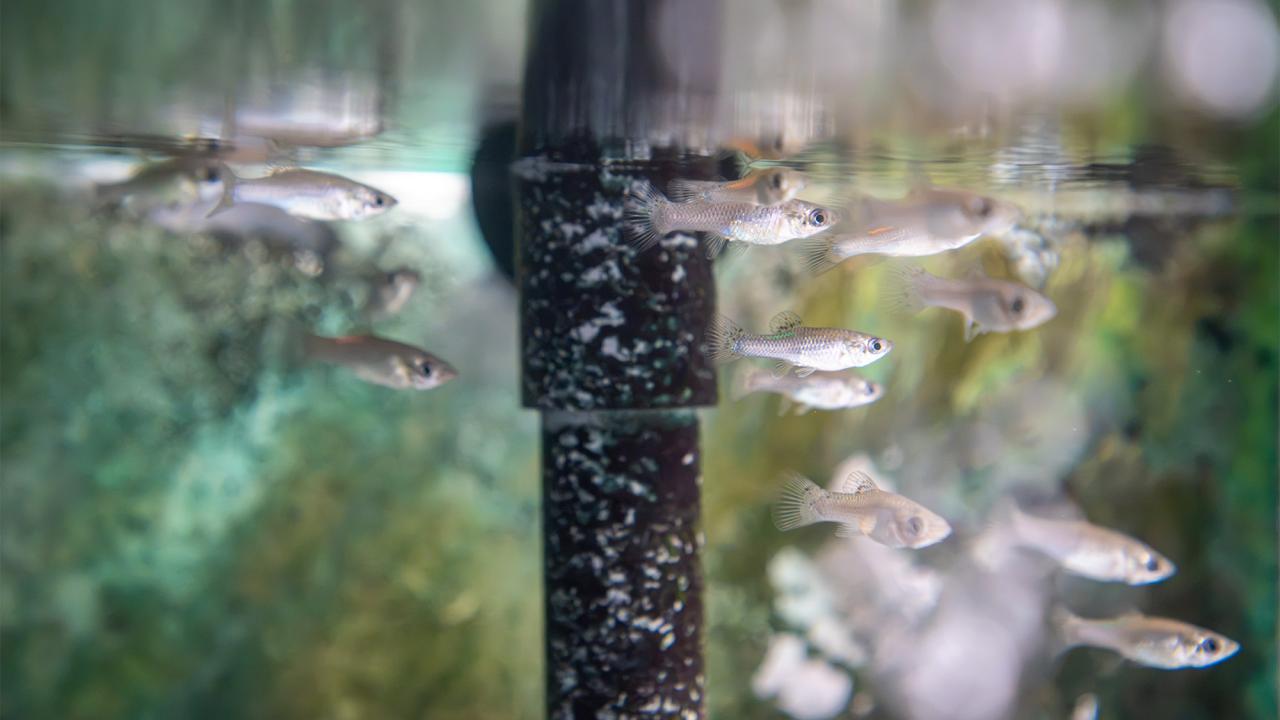
When they’re first born, baby Amazon mollies aren’t super social, but after about three weeks, something switches and they become socially attuned to their schoolmates. A new study led by researchers from the University of California, Davis, shows that groups of fish develop idiosyncratic group dynamics, even when the groups are genetically identical. Published in Current Biology, the findings offers new insight into how social interactions shape the development of group behavior.
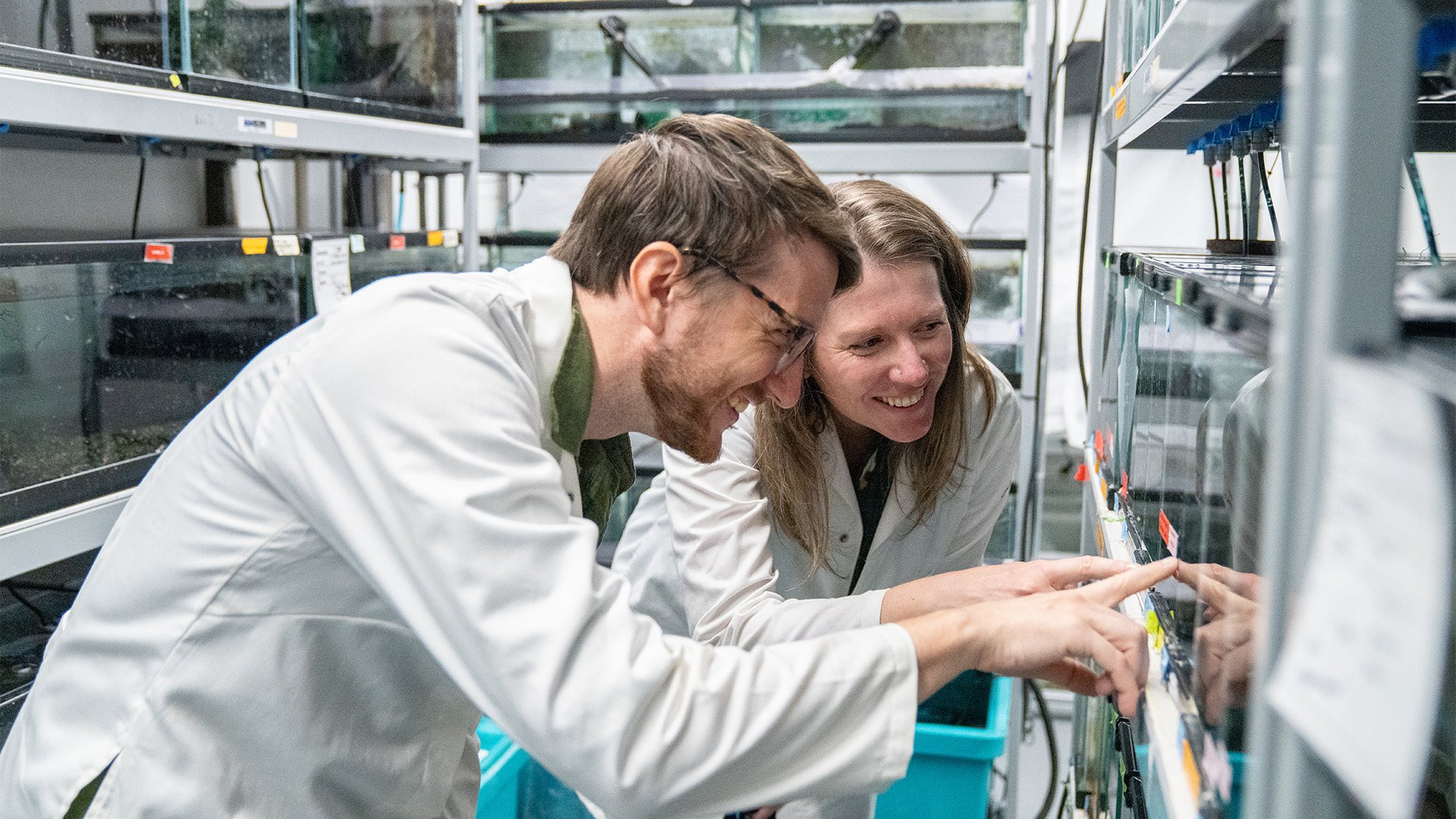
“There is no other study that has this level of experimental control or ability to track animal groups so closely from birth,”said Kate Laskowski, an associate professor of evolution and ecology. “This lets us really get at the question: do otherwise identical groups develop in identical ways? And the short answer is no.”
Why do Groups Behave Differently?
An animal’s behavior is thought to be a result of interactions between its genetic makeup and its environment. Once animals form groups, social interactions make things even more complicated. To disentangle these factors, the researchers studied group behavior in the Amazon molly (Poecilia formosa), an all-female, naturally clonal freshwater fish species that gives birth to genetically identical offspring.
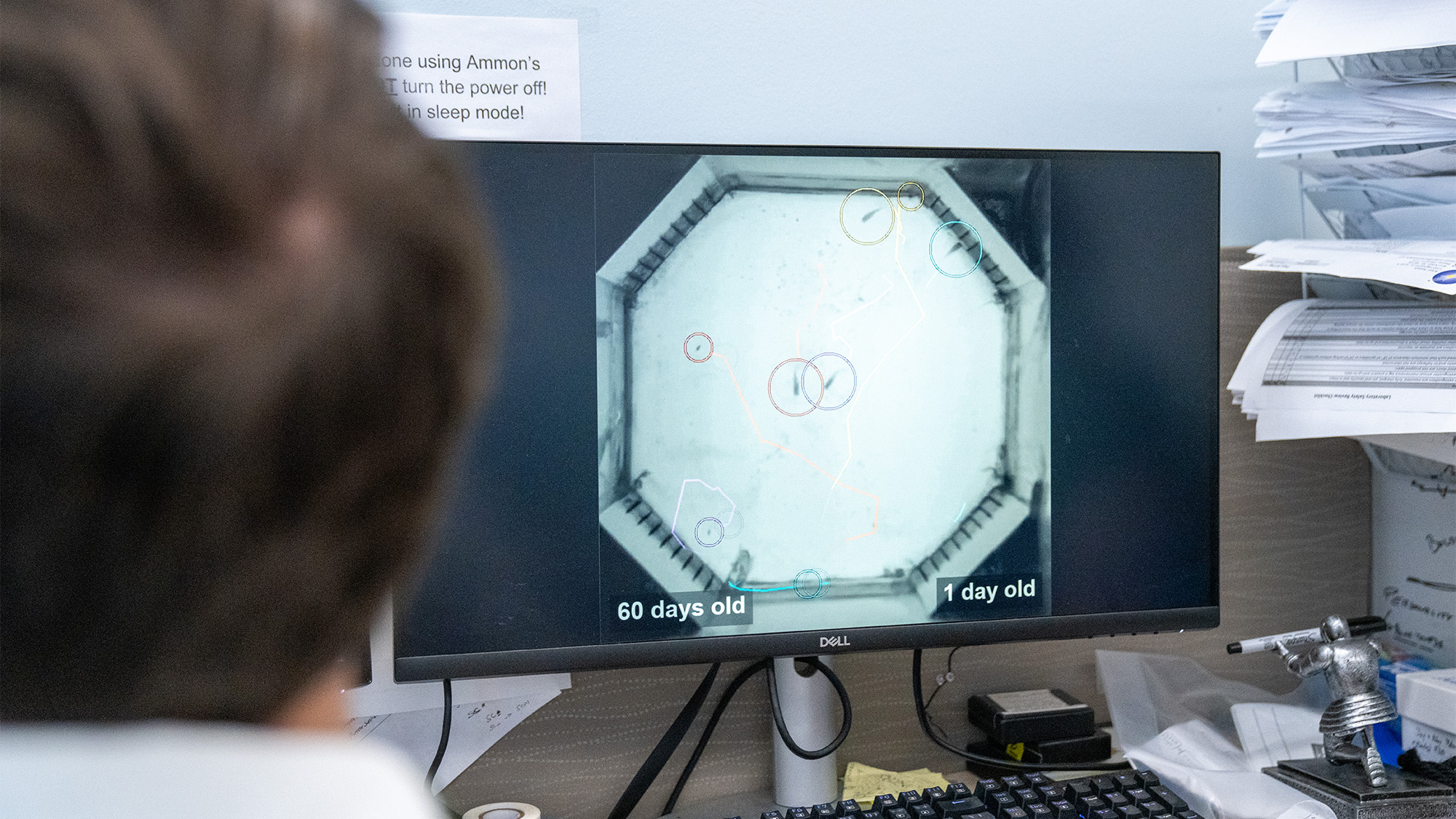
To understand how group social behavior develops and changes, the researchers compared ten quartets of Amazon molly siblings raised in identical fish tanks for their first 55 days after birth. They used overhead cameras to continuously capture the fishes’ movements and compared behaviors including the group’s average activity level and swimming speed, the location of group members in the tank, and how social the different groups were.
Sociality Comes with Age
In all of the groups, the baby fish started out by zipping around their tanks at random, paying little attention to the other fish and spending most of their time at the edge of the tank. After a few weeks, the fish moved more slowly, spent more time near other group members and more time in the center of the tank.
“By the end, they're all chilling in the middle together,” said Ammon Perkes, a postdoctoral fellow in Laskowski's lab and first author on the paper. “When they're first born, they spend most of their time about 10 cm apart from other group members — which is huge for a fish that's only a centimeter long — but by the time they’re 55 days old, they're sticking within around 5 cm of each other. So, they go from being around ten body lengths apart to two body lengths apart.”
Predictable Individuals, Unpredictable Groups
Despite these similarities, the different fish groups showed a lot of variation in their behavior: the fastest group was almost twice as fast as the slowest group, and some groups stuck closer together. The groups’ behavioral patterns also changed over the course of the 55-day experiment.
“If you look at a group’s behavior on day one, you can predict their behavior on day five, but not on day 20,” said Perkes. “But then, by day 40 you can predict the group’s behavior on day 50. We weren't able to record forever, so we don't know whether a group’s behavior eventually stabilizes or if they keep mixing it up every couple of weeks.”
This contrasts with individual behavior patterns, which Laskowski investigated in a parallel study, previously published in Nature Communications: despite being genetically identical, individual Amazon mollies behave differently, and these individual “personalities” seem to be stable from the start.
“At the individual level, they’re very predictable — whoever is the fastest on day one is almost always the fastest on day 100 — but as soon as you put them into groups you lose that consistency because of all the complex social interactions that are going on,” said Laskowski.
Although the study was conducted in fish, the researchers say that their findings could help understand group behavior in animals more broadly.
“Many animals make groups, and they do it for all the same reasons,” said Laskowski. “Our results suggest that social feedback plays a critical but unpredictable role in shaping group-level behavior.”
Additional authors on the study are: Jolle W. Jolles, Centre for Advanced Studies Blanes, Spain; and Carolina Doran, David Bierbach, and Max Wolf, Leibniz Institute of Freshwater Ecology and Inland Fisheries, Germany.
The work was funded by the Deutsche Forschungsgemeinschaft, the Alexander von Humboldt Foundation, the Zukunftskolleg Institute of Advanced Studies at the University of Konstanz, the National Science Foundation, and the National Institutes of Health.
Media Resources
- Group-level phenotypes are idiosyncratic yet unpredictable over development in a clonal fish (Current Biology)
- Liana Wait is a freelance science writer based in Philadelphia. She has a Ph.D. in ecology and evolutionary biology and specializes in writing about the life sciences.