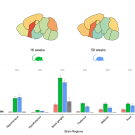
The first atlas of metabolites in the mouse brain has been published by a team led by UC Davis researchers. The dataset includes 1,547 different molecules across 10 brain regions in male and female laboratory mice from adolescence through adulthood and into advanced old age. The work is published Oct. 15 in the Nature Communications. The complete dataset is publicly available at https://mouse.atlas.metabolomics.us/.
University of California, Davis, evolutionary biologist Rachael Bay has been awarded a 2021 Packard Fellowship in Science and Engineering by the David and Lucile Packard Foundation. The fellowship offers Bay, assistant professor in the Department of Evolution and Ecology, College of Biological Sciences, an opportunity to advance her work on the role of human action on evolutionary trajectories of species.
Gerald Quon, an assistant professor in the Department of Molecular and Cellular Biology and the Genome Center, has received a New Innovator Award from the National Institutes of Health (NIH). The award will support the development of a computational framework for characterizing how genetic variants associated with the risk of psychiatric diseases like schizophrenia and bipolar disorder work at the at the cellular level.
Sunflowers face the rising sun because increased morning warmth attracts more bees and also helps the plants reproduce more efficiently, according to a study by researchers at the University of California, Davis. The results were published Aug. 9 in New Phytologist.
“It’s quite striking that they face east,” said Stacey Harmer, professor of plant biology in the UC Davis College of Biological Sciences and senior author on the paper. “It’s better for them to face east, as they produce more offspring.”
Four members of the UC Davis College of Biological Sciences are recipients of 2021 Chancellor’s Awards for Excellence in Undergraduate Research. Two undergraduate students, a faculty member and a postdoctoral researcher were among those honored by UC Davis Chancellor Gary S. May at the virtual awards ceremony.
Think of chromosomes as nature’s shoelaces. Built from DNA, these thread-like structures carry and ferry the genetic information necessary for life. To maintain genetic integrity, chromosomes possess protective structures located at their ends called telomeres. These telomeres are like the plastic tips of shoelaces, preventing the genetic thread from unraveling as cells continuously divide.
Drought can have a lasting impact on the community of microbes that live in and around roots of rice plants, a team led by UC Davis researchers has found. Root-associated microbes help plants take up nutrients from the soil, so the finding could help in understanding how rice responds to dry spells and how it can be made more resilient to drought. The work was published July 22 in Nature Plants.
Nitzan Shabek, an assistant professor in the Department of Plant Biology, has received a $837,000 CAREER Award from the National Science Foundation. The five-year award will support Shabek’s research into elucidating the sensing mechanism of an emerging and unique class of plant hormones. Additionally, as an integral part of the research activities, this project will create a unique teaching platform and outreach program to encourage young students to pursue knowledge in STEM.
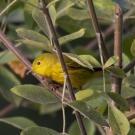
As climate change takes hold across the Americas, some areas will get wetter, and others will get hotter and drier. A new study of the yellow warbler, a widespread migratory songbird, shows that individuals have the same climatic preferences across their migratory range. The work is published Feb. 17 in Ecology Letters.
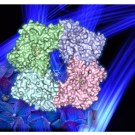
Plants can perceive and react to light across a wide spectrum. New research from Prof. Nitzan Shabek’s laboratory in the Department of Plant Biology, College of Biological Sciences shows how plants can respond to blue light in particular.
“Plants can see much better than we can,” Shabek said.