Graduate Student Stories

Monkey Business: Using Genetics to Understand Decision-Making in Monkeys

Abigail Morris first visited the Peruvian Amazon when she was 6 years old. Now, as a Ph.D. candidate in the Animal Behavior Graduate Group, she has returned to study how seasonal flooding affects the behavior, diet and population genetics of two species of monkey: monk sakis (Pithecia monachus) and large-headed capuchins (Sapajus apella macrocephalus).

Newly Recognized Pathway Could Protect People with Diabetes from Hypoglycemia

A new study by the University of California, Davis, shows how cells work together to avoid a sudden drop in blood sugar. Understanding these feedback loops could improve the lives of people with diabetes and help them avoid dangerous hypoglycemia.

The work was published Sept. 16 in Proceedings of the National Academy of Sciences. 

Worms Reveal Just How Cramped Cells Really Are

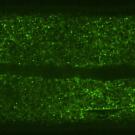
In a new study published in Science Advances on September 10, a team of UC Davis researchers tracked the movement of fluorescent particles inside the cells of microscopic worms, providing unprecedented insights into cellular crowding in a multicellular animal. They found that the cytoplasm inside the worms was significantly more crowded and compartmentalized than in single-celled yeast or mammalian tissue culture cells, which are more commonly used to gauge internal cellular dynamics.

Championing Mentorship Through Marine Research: Claire Murphy Receives Top CBS Graduate Award

Claire Murphy, a fifth-year Ph.D. candidate in the Population Biology Graduate Group, wants everyone to feel like they belong in research. Based at the Bodega Marine Laboratory (BML), Murphy studies how tiny seagrass crustaceans avoid being eaten by fish, crabs, and other predators. Since coming to UC Davis in 2020, she’s mentored 11 UC Davis undergraduates, including five independent summer research projects.

Restoring Voices—and Identity—with Neuroengineering

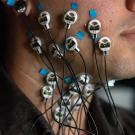
Lee Miller vividly recalls the day in 2021 when he met a woman who had lost the function of her vocal cords. In hoarse, whispering tones she explained how her voice had been instrumental to her vocation. Losing it, she said, undercut her life’s purpose. He had to listen carefully to hear her faint words, but the lesson “was really powerful.”

Fish Teeth Show How Ease of Innovation Enables Rapid Evolution

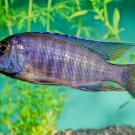
It’s not what you do, it’s how readily you do it. Rapid evolutionary change might have more to do with how easily a key innovation can be gained or lost rather than with the innovation itself, according to new work by biologists at the University of California, Davis, who studied how teeth in certain fishes evolved in response to food sources and habitats.

Their work was published Feb. 26 in Nature.

Alum Receives Early Career Fellowship

Victoria Watson-Zink, Ph.D. ’22, a postdoctoral evolutionary marine biologist, received the Howard Hughes Medical Institute’s Hanna H. Gray Fellowship last month. This year’s fellowship supports the transition of 25 early-career scientists to leading labs and becoming tenured faculty.