News Articles

All articles

Forty Years of Science in 40 Minutes

He quipped that he was "going to cover 40 years of science in 40 minutes."

And UC Davis distinguished professor emeritus Harris Lewin, renowned for his research in comparative mammalian genomics and immunogenetics, did just that when he delivered the inaugural UC Davis New Emeriti Distinguished Lecture on “From Chickens to Cows to Everything: Perspectives from 40 Years in Science."

How Dragonflies Catch Prey in Midair

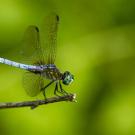
Despite their small size, dragonflies are arguably one of the most impressive predators in the animal kingdom. According to Rachel Crane, a biologist at the University of California Davis, dragonflies often catch up to 95% of the prey they go after, a rate she described as “wildly high compared to where most predators are.” 

More incredible still, this prey capture all happens in midair.

“Dragonflies are doing these really, really fast, high-speed aerial captures,” said Crane. 

Priya Shah Recognized for Exceptional Innovation

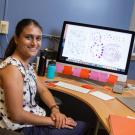
Chemical engineer and microbiologist Priya Shah is unraveling the essential aspects of arboviruses - viruses transmitted by mosquitoes, ticks, or other arthropods - aiming to thwart this major source of emerging diseases by identifying novel therapeutic targets.

For her innovative research, she has been awarded $40,000 from a UC Davis endowment set up by anonymous donors. The awards, given annually since 2016, are designated for non-tenured ladder-track faculty.

From the Dean: Gratitude at Year's End

Winter doesn’t begin officially until later this month, but there was ice on the cars (and roofs!) this morning. Being from Philadelphia, ice in December isn’t something all that unusual to me, but here in our region of California it’s always a bit of a surprise. With finals behind us, and the end of the year just around the corner, things are slowing down on campus.

Hibernating Corals and the Microbiomes That Sustain Them

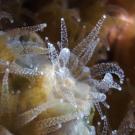
As winter approaches, many species of animals — from bears and squirrels to parasitic wasps and a few lucky humans — hunker down for some needed rest. The northern star coral (Astrangia poculata) also enters a hibernating state of dormancy, or quiescence, during this time. But what happens to its microbiome while it’s sleeping?

CBS Plant Ecologist One of Five to Receive L'Oréal Fellowship

A prestigious fellowship has found a new recipient in CBS Postdoctoral Researcher Marina LaForgia, who was one of 5 postdocs in the country named a 2022 L'Oréal USA for Women in Science Fellow in November.

In her teaching, LaForgia, who studies the ecology of seeds to understand the effects of climate change and invasive plants on native plants, focuses on the women who have helped advance the field of botany.

Breaking the Loop Leading to Muscular Fibrosis

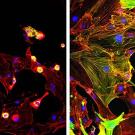
A team of UC Davis researchers is on a mission to solve a key mystery in the formation of muscular fibrosis. The researchers are studying why special stem cells known as fibro-adipogenic progenitors (FAPs) get derailed from normal muscle regeneration following injury, and instead produce excess material that can lead to fibrosis. The team may have unlocked a way to prevent these cells from getting stuck in an endless loop of collagen production, causing fibrotic muscles. 

Making Prosthetics More Lifelike

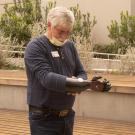
David Brockman, a retired CalFire captain and avid outdoorsman, built a deck in the backyard of his home last year, without the use of his dominant right hand, which he lost in an accident. The prosthetic hand he used instead was a crude but functional steel hook-and-harness device.

Brockman has tried other artificial limbs, including a high-tech prosthesis called a myoelectric. It looks like a hand and works by using electrical signals from muscles in the forearm. But that one just didn’t work for him.