Research Stories

How Tomato Plants Use Their Roots to Ration Water During Drought

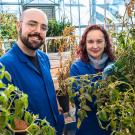
Plants have to be flexible to survive environmental changes, and the adaptive methods they deploy must often be as changeable as the shifts in climate and condition to which they adapt. To cope with drought, plant roots produce a water-repellent polymer called suberin that blocks water from flowing up towards the leaves, where it would quickly evaporate. Without suberin, the resulting water loss would be like leaving the tap running.

Citrus Greening Bacteria Affects Pest's Sense of Smell

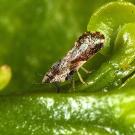
A failed field test has led to a major discovery about the Asian citrus psyllid, the insect that spreads the devastating citrus greening disease. According to new research, the bacteria that cause citrus greening can interfere with the insect’s sense of smell, rendering some kinds of insect traps useless. The work is currently available as a preprint.

Immune Cells Drive Sex Reversal in Zebrafish – and Perhaps Fertility Loss in Women

Female zebrafish (Danio rerio) have an unusual tendency: if their egg cells are damaged, they can turn into males. Bruce Draper, a professor in the Department of Molecular and Cellular Biology (MCB) and Florence Marlow, a professor at the Icahn School of Medicine at Mount Sinai, have discovered that immune cells called macrophages play a key role in this process. These cells normally keep things “tidy” by removing dead or damaged cells – but in zebrafish they can also remodel the ovaries into sperm-producing testes. “It’s a pretty interesting and novel idea,” says Draper.

$15 Million Grant Will Support Study on the Role of the Thalamus in Cognitive Control and Schizophrenia

When it comes to brain anatomy, the thalamus occupies a humble position.  It sits at the top of our brainstem — an apparent vestige of our reptilian past — and is dwarfed by the massive, wrinkled cerebral cortex, which sits above it. The cortex is often credited as the throne of human intellect. But a team of researchers across the country, with UC Davis led by W. Martin Usrey, sees the thalamus as a critical coordinator of our thoughts and perceptions – and pivotal in human disease.

A Mixed Origin Made Maize Successful

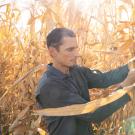
Maize is one of the world’s most widely grown crops. It is used for both human and animal foods and holds great cultural significance, especially for indigenous peoples in the Americas. Yet despite its importance, the origins of the grain have been hotly debated for more than a century. Now new research, published Dec. 1 in Science, shows that all modern maize descends from a hybrid created just over 5000 years ago in central Mexico, thousands of years after the plant was first domesticated.

How Students Dive into Marine Science at UC Davis

UC Davis junior Caroline Donohew watched the everyday power of biology in just five minutes during her summer session class at UC Davis’ Bodega Marine Laboratory, or BML, a coastal research and education facility about 100 miles west of campus. 

While observing a mussel’s muscle through a microscope, “I saw it create a byssal thread in real time,” said Donohew, who is from San Anselmo. “And it was just so cool.” 

Understanding Neutrophil Decision-Making: How Immune Cells Prioritize Competing Signals

Neutrophils, the primary foot soldiers of the immune system, swarm to sites of infection and inflammation by following breadcrumb pathways made up of signaling molecules. But the human body is a complex place, and neutrophils are often simultaneously bombarded with multiple signals, some of which are more important than others. For example, signals of infection or tissue damage require more urgent attention than signals produced by other immune cells.

How Sunflowers See the Sun

Sunflowers famously turn their faces to follow the sun as it crosses the sky. But how do sunflowers “see” the sun to follow it? New work from plant biologists at the University of California, Davis, published Oct. 31 in PLOS Biology, shows that they use a different, novel mechanism from that previously thought.

“This was a total surprise for us,” said Stacey Harmer, professor of plant biology at UC Davis and senior author on the paper.